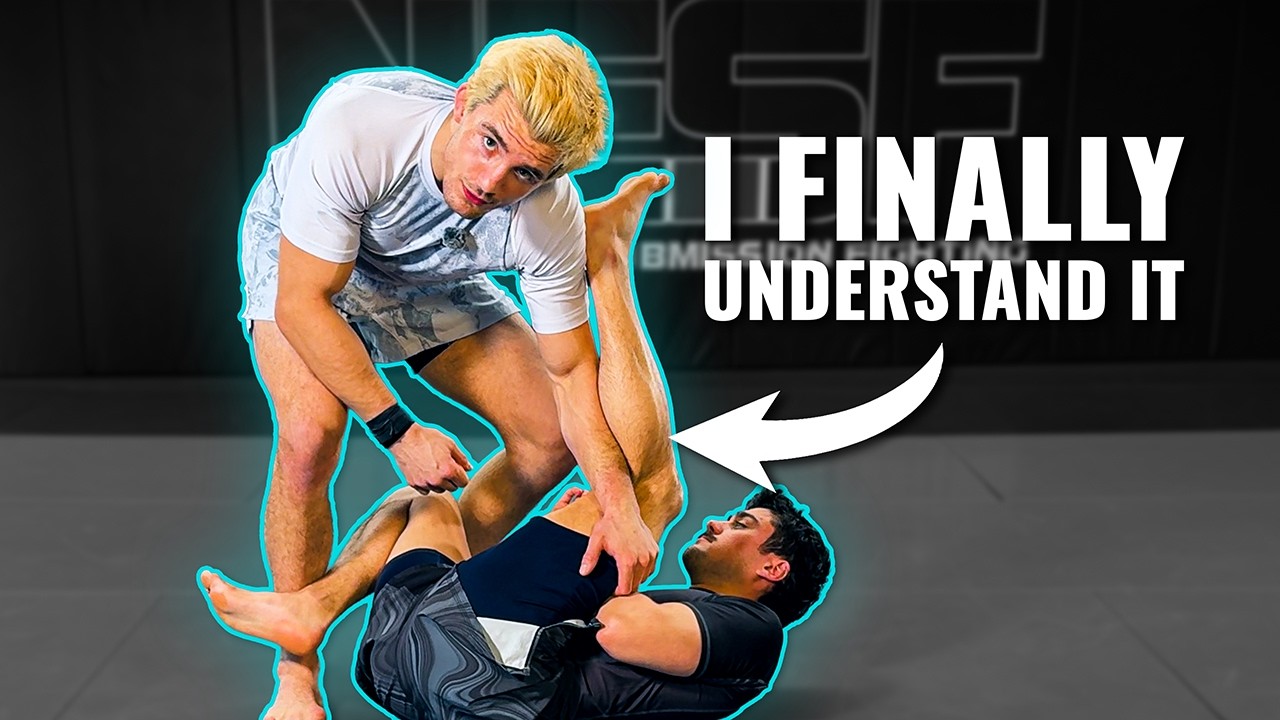
Boston Submission Fighting, a no-gi grappling school in Arlington, Massachusetts, has published a crab-ride tutorial showing entries from top position against open guard, north-south and the leg drag. The roughly four-and-a-half-minute YouTube video also includes a practice game for developing the position.
▶ YouTube
The lesson addresses a useful choice in submission grappling: whether to finish passing the guard or use the passing exchange to get behind an opponent. It presents the crab ride as a route from top-position engagement toward the back, extending a technique closely associated with inverted guard play into the no-gi passing game.
 To master guard passingLucas Lepri's guard passing — full review →
A staff account shared the video on Reddit around November 27. The instructional offers a compact introduction to a position that has spread from elite competition and specialist courses into the teaching programs of local academies.
Three Routes From the Passing Exchange
The tutorial approaches the crab ride through three situations: working above an open guard, reaching north-south and using a leg drag. Those starting points give the lesson a clear connection to everyday grappling. The subject is not simply how to invert underneath someone, but how a player already working from above can redirect an exchange toward the opponent’s back.
Open guard places the passer in front of an opponent whose legs remain involved in controlling distance and movement. North-south changes that orientation, bringing the top player around the opponent’s head. A leg drag creates another angle by directing the opponent’s legs to one side. BSF brings these different relationships into a lesson about finding access behind the hips.
The common destination is the crab ride, an intermediate position used to control and follow an opponent on the way to a back take. Reaching that position and completing control of the back are separate tasks. That distinction helps explain why the ride deserves attention as a skill of its own, rather than being treated as a brief movement between more familiar positions.
No-gi changes the available grips. Without a belt or trouser material to hold, crab-ride control uses alternatives such as cupping the hips. The underlying aim remains to establish a connection that allows the attacking player to work behind the opponent.
From Mendes and Miyao to No-Gi Passing
Instructionals close to this article
 Systematically Attacking The Half Guard 2.0 by Gordon RyanView product →
The crab ride has a substantial place on the competitive jiu-jitsu map. Rafael Mendes, a multiple-time featherweight winner at the International Brazilian Jiu-Jitsu Federation’s World Championship, and his brother helped establish it at the highest level through combinations of berimbolos and leg drags in the early 2010s. Paulo Miyao, a black belt under Cicero Costha, and his brother João made the berimbolo and crab ride central to their competitive style. Their development of the position included the use of a twister hook to advance toward the back.
That history explains the position’s association with inversion, but it does not limit where the ride can begin. Some practitioners have suggested the crab ride now sees more use than the berimbolo itself. The distinction is relevant to BSF’s lesson: the ride can be studied as a destination reached through several exchanges, including opportunities created while passing.
Lachlan Giles, an Australian no-gi instructor and physiotherapist, has also helped organize the position for students through a dedicated course on Submeta, his instructional platform. BSF’s free video sits at a different scale, offering a short lesson built around several entries and a way to practice them.
Similar hooks also exist in wrestling’s ground positions. Jiu-jitsu has adapted that kind of control to its own scrambles and back-taking sequences. The overlap helps place the crab ride within a broader grappling problem: staying attached behind an opponent while both athletes are moving.
A Local Academy Adds a Practice Game
Boston Submission Fighting’s head instructor is Dave Roy, a fourth-degree black belt who co-founded New England Submission Fighting in 1993, which the school describes as one of New England’s earliest MMA schools. The academy’s tutorial brings a modern no-gi topic into that established regional training setting.
The inclusion of a practice game is a useful part of the video’s scope. A demonstration can show the shape of an entry; a practice format gives training partners a way to spend time exploring the position. For a ride that links passing exchanges, movement around the hips and access to the back, that middle stage warrants attention.
The lesson also reflects the growing availability of specialized technical instruction. A position once strongly identified with elite berimbolo players is now the subject of a short, free academy video. Viewers can encounter its top-position applications without first committing to a lengthy instructional series.
What people are saying
Discussion around related clips and the wider crab-ride topic mixes technical curiosity with skepticism about mobility and practical application.
- Some joked that this was exactly the kind of online technique their coaches discourage students from copying.
- Older practitioners questioned whether their joints and mobility would accommodate the movement.
- Others wanted a longer explanation and were willing to wait for more detail.
- Some questioned how the position would hold up when strikes were involved, favoring basic movements for self-defense.
- One comparison described the crab ride as butterfly guard played from behind the opponent.
BSF’s tutorial gives the crab ride a concrete role in no-gi training: a route toward the back from exchanges that begin with the passer on top. Its contribution is to connect recognizable passing situations with an intermediate control position and a practice game, making the technique easier to approach as part of a working grappling sequence.
Sources: Boston Submission Fighting, YouTube crab-ride tutorial; Reddit.