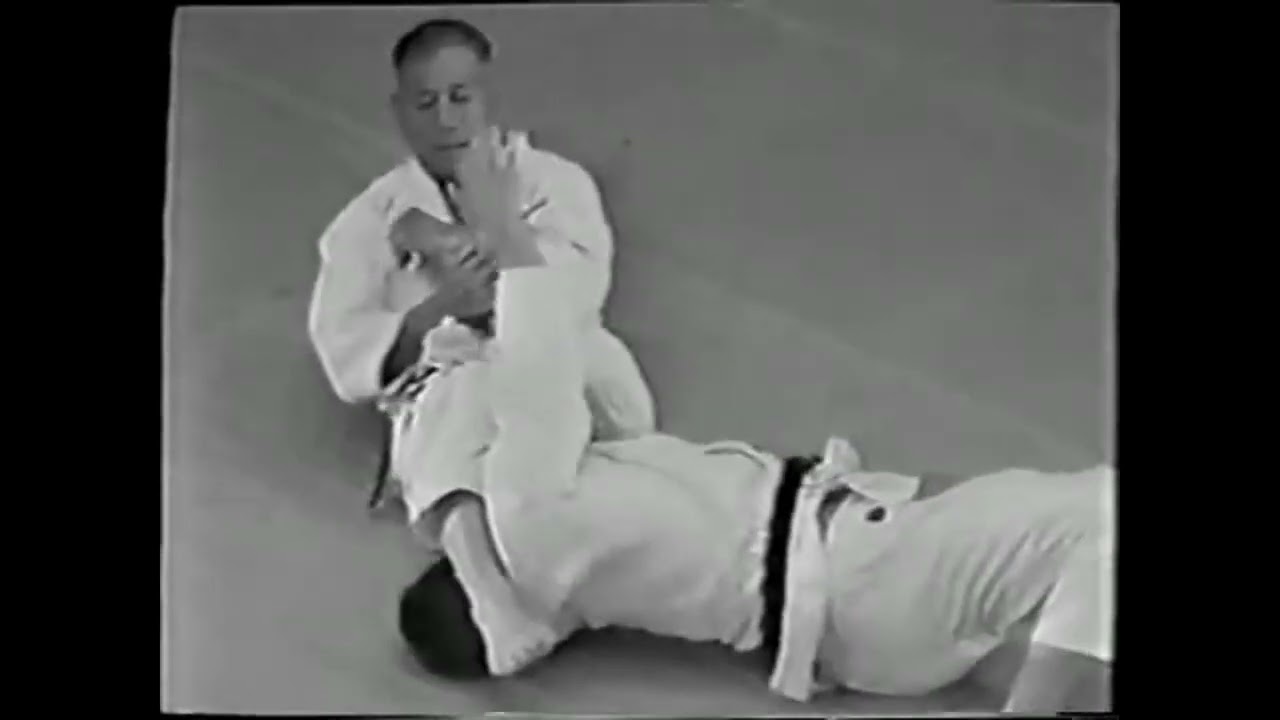
On May 5, 1949, Masahiko Kimura and Takahiko Ishikawa fought through extra time in the All-Japan Championships final and finished as joint champions. Kimura, a three-time winner of Japan’s prewar national championship, had returned to the top of a sport whose place in Japanese schools and public institutions had been dismantled during the occupation.
For jiu-jitsu and submission-grappling readers, his story reaches beyond a championship result. Within a year, Kimura would enter professional judo while a new national federation established an amateur competitive structure. His career crossed the divide between organized sport and paid grappling exhibitions as that divide was taking shape.
A November 26 article by BJJDOC brought renewed attention to this period under the headline “Judo Came Close To Being Permanently Banned Following WWII Defeat.” The history is more specific than a nationwide prohibition narrowly avoided: school judo was suspended, a powerful martial arts organization was dissolved, and practice and competition continued through the upheaval.
Kimura returned to a sport stripped of its school foothold
Kimura’s competitive standing had been established before the war through three consecutive national championship victories. His postwar return therefore connected two versions of Japanese judo: the prewar system in which he became a champion and the reorganized sport that emerged under occupation.
The restrictions struck directly at education. A Ministry of Education directive issued in November 1945 is reported to have suspended school classes and extracurricular activities in judo and other martial arts, according to secondary accounts of the period. A follow-up measure reportedly extended the prohibition to their practice at schools and associated facilities, according to secondary accounts.
That removed more than a place on the timetable. School facilities were also places where students could train outside formal lessons. The two measures closed both routes.
Yet judo’s position outside schools was different. The Ministry of Health and Welfare is reported to have encouraged the resumption of judo and kendo as community physical education in the months after the war, according to secondary accounts. The Kodokan, the institution at the center of judo’s development, continued training and tournaments. It had reportedly resumed practice after the March 1945 air raids, according to secondary accounts.
Kimura’s return to competition belongs within that continuing activity. In 1947, he won the West Japan Championships, a regional championship that supplied a concrete marker of competitive judo’s survival during the occupation.
The organization that disappeared in November 1946
The institutional rupture came with the forced dissolution of the Dai Nippon Butokukai on November 9, 1946. An Interior Ministry order, issued at the direction of occupation headquarters, dissolved the organization and confiscated its property.
Founded in Kyoto in 1895, the Butokukai had promoted judo, kendo and kyudo and supported their introduction into school education. Its wartime role placed it at the center of a different project. In March 1942, it became a government-affiliated organization under the presidency of Prime Minister Hideki Tojo, bringing martial arts under wartime state control.
Its dissolution was therefore distinct from the school restrictions imposed a year earlier. The November dates mark separate actions: the suspension of school martial arts in 1945 and the destruction of a major governing institution in 1946.
Judo itself was a modern educational martial art. Jigoro Kano founded Kodokan judo in Tokyo in 1882, building an institution that would outlive both him and the wartime governing structure. Kano died in 1938, before the occupation-era restrictions.
Before the Butokukai’s dissolution, it and the Kodokan had maintained parallel systems of ranks and tournaments. The removal of one side ended that dual structure and moved domestic judo toward unified administration centered on the Kodokan.
Risei Kano built a federation as Kimura reclaimed a title
Risei Kano, Jigoro Kano’s son, became the Kodokan’s third president in November 1946. His work during the occupation included national unification and petitions for judo’s return to schools. While Kimura’s recovery was visible in competition results, Kano’s took place through institutional rebuilding.
The two stories converged in May 1949. Kimura’s opponent in the All-Japan final was Takahiko Ishikawa, a judoka of the same generation. Their extended final ended with both men recognized as champions.
One day later, on May 6, the All Japan Judo Federation was established. Risei Kano became its first president.
The sequence captures the transition unusually clearly: a national championship settled with two winners, followed the next day by the creation of a single national federation. Competitive judo was functioning while its governing structure was still being rebuilt.
The federation emerged from existing organization rather than an isolated rescue effort. A preparatory committee is reported to have formed the previous year, and the Kodokan’s established associations of ranked practitioners were incorporated into the new national structure.
As an amateur sports body, the federation joined the Japan Amateur Sports Association. School judo returned in 1950, restoring the educational foothold removed five years earlier.
Kimura’s next move led into professional judo
For Kimura, the next confirmed step was professional competition. In 1950, he joined a newly launched professional judo organization, taking his established championship reputation into a separate branch of the sport.
That move gives the institutional changes a personal dimension. A leading competitor from the prewar era had returned, won a regional championship and shared the national title. He then pursued a professional route just as the federation consolidated judo’s amateur identity.
For grappling, the distinction remains central to understanding this period. The restoration of judo did not produce one competition model encompassing every prominent athlete. Federation competition and professional promotion developed on separate tracks, with Kimura’s career placing him directly at their intersection.
What people are saying
Public discussion of occupation-era martial arts ranges from stories of survival to the consequences of reorganizing them as sports. These reactions concern the broader historical subject, rather than a single championship or a uniform response to the BJJDOC article.
- Some portray judo’s survival as the work of a small group of determined black belts.
- Others emphasize the particularly severe restrictions faced by sword-based martial arts.
- Demonstrations and instruction for occupation personnel feature in accounts of how judo gained acceptance.
- Some focus on prominent judoka moving into professional promotions after losing established opportunities.
- Others highlight comparisons with wrestling and fencing as ways of presenting martial arts as sports.
School restoration opened the next chapter
After the 1949 final, the confirmed paths separated: Kimura entered professional judo in 1950, while school judo returned and the amateur federation developed the national sport. Judo’s recognition as sport helped open the route toward international federation activity and Olympic competition. The enduring question is how that recovery should be understood: preserving competition was one achievement; deciding which institutions and professional careers would belong within the rebuilt sport was another.
Sources: BJJDOC; All Japan Judo Federation historical chronology.